
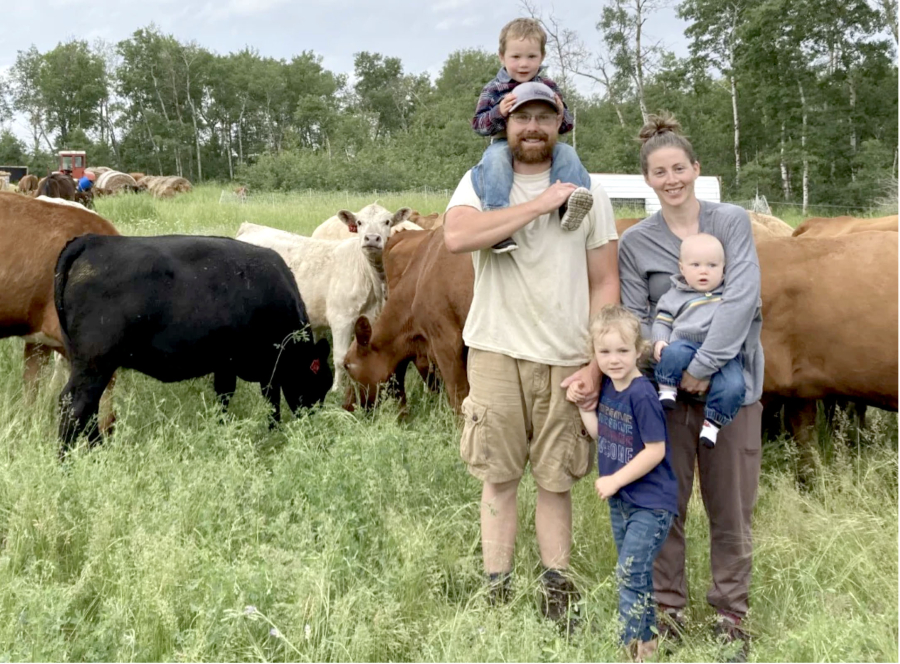
“At the same time, Sean has always been deeply health-conscious, prioritizing whole foods and keeping chemicals out of our home. As we began working with natural systems—using animals and diverse plant species to improve soil health—we became increasingly excited by the realization that this approach allowed us to care for our land and animals while also producing truly nourishing food.”
Connecting soil, animal and human health, they chose not to follow a conventional model of raising chickens and pigs exclusively in barns, but return to natural grazing cycles.
“What sets our farm apart is that every animal is truly raised on pasture and moved daily in a way that protects and regenerates our soil,” she explained. “Each species plays a specific role, and we allow them to express their natural, God-given instincts while working together to build healthier land.”
As Buckley said, each of their animal species has its role and is important not only for its food value, but what it adds to the land. Their pigs are raised outdoors in forested areas. They can run, root and bask in the sun. This helps disturb compacted soil, stimulate seed banks and increase plant diversity, helping make the soil healthier.
The laying hens are the “clean up crew”. Following the cattle, they scratch through the manure, spreading nutrients as they go. They gobble up flies, grasshoppers and other insects, reducing pest pressure and breaking parasite cycles. Broiler chickens scratch through the soil and cow patties, and their manure provides nutrients during the growing season as they live as chickens were meant to.
The lambs graze different plant species than others, and their small size means they can manage orchard areas without damaging the trees.
“The cattle have the largest impact on the land. Through managed grazing and winter bale grazing, they return significant amounts of organic matter and nutrients back into the soil. In summer, our main herd manages larger pastures, while our pasture-raised beef rotates across our home acreage alongside broiler chickens, laying hens, and lambs, creating a layered, cooperative system.”
“When animals are allowed to express their innate behaviours within a thoughtfully managed system, they don’t degrade the land—they heal it,” Buckley continued. “That belief is at the heart of how and why we farm.”
The animals are rotated regularly to protect the soil. As Buckley explained, each animal plays a part in a larger, regenerative system. Cattle graze and fertilize, chickens follow to spread nutrients and fight pests pigs disturb compacted ground, lambs manage other forage. It is a natural system.
Creating biodiversity in the farm means encouraging a wide variety of grasses, legumes, herbs and insects instead of a monoculture. Animals raised outside means more sun, healthier bodies, all of which impacts their meat and fat composition. Sunlight and movement support natural vitamin production, while diverse forage contributes to more balanced fatty-acid profile and higher nutrient density in their meat and eggs.
“Healthy soil grows diverse plants, diverse plants nourish healthier animals, and healthier animals produce better food. By working with natural cycles instead of against them, we’re able to raise food that supports animal welfare, soil health, and ultimately the long-term health of the people who eat it.”
Deer Meadow gets its “farmacy” name because they see food as both fuel and medicine. What we eat impacts how our bodies function. Animals raised in this atmosphere are healthier, and this positively affects our energy, immunity, brain function and overall well being.
Deer Meadow sells beef, pork, lamb, chickens and eggs. They do not process their own meat, but it is instead sent to provincially inspected facilities.
They have developed a loyal customer base, with many local from the Oak Lake, Brandon and Virden areas, but also others who travel farther for the quality food. Buckley said it is humbling to see people travel a distance for produce they can trust. People can come visit the farm and see how their food is produced, participating in tours and farm suppers. She added customers appreciate that they never stop working to improve their land and animals, and how transparent they are in their process.
They take their work seriously, as producing healthy, pasture-raised food is very important to them. They know the food they raise is nourishing and supports long-term well-being. It can be a part of a complete lifestyle change.
“This isn’t just a job,” Buckley stated. “It’s our life’s mission to create a place of healing—to awaken people out of their slumber and remind them that they matter, that their health matters, and that their connection with their food and the land matters. We want to do more than feed people; we want to teach them to slow down and cook, to slow down and share meals with their families, to slow down and listen to their bodies and what they need for nourishment. Our goal is to change the way people see their food and themselves. For us, it’s a life mission to help reconnect people to life itself.”
by PAUL RAYNER, Recorder staff