
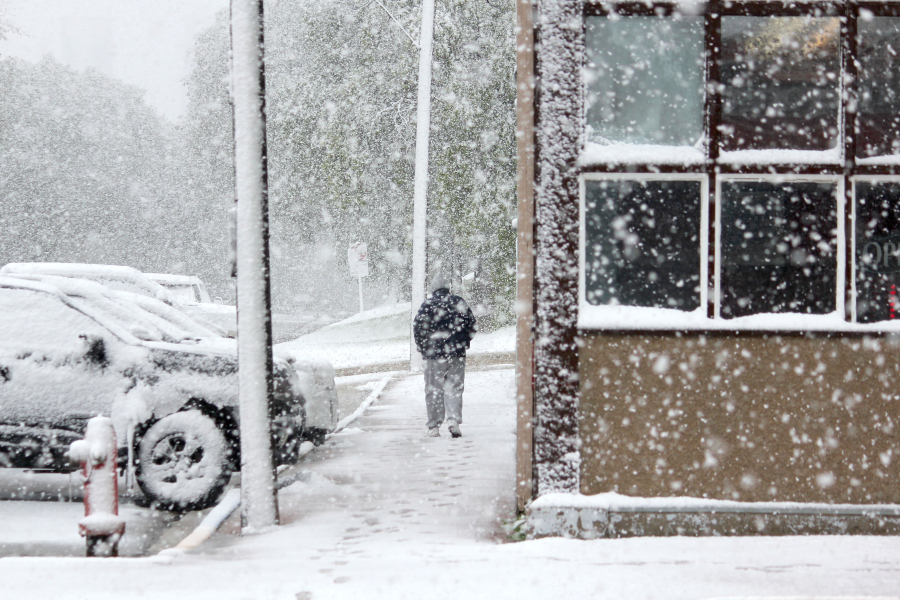
The Peace Garden did not lose power, which was definitely a plus. They started cleanup immediately, and with Monday being Memorial Day in the US, they were happy the Canadian staff really stepped up. Chapman said they have been pulling people from other departments to help with the work and it was proceeding as he spoke. There was no damage to their buildings, and the annuals had not yet been planted. He was not sure how it stacked up to the 2022 storm, where they had snow in April followed by an ice storm, but it has been a challenging year so far.
The storm had its impact just north of the Garden. In the Turtle Mountain Provincial Park and William Lake Park, there was significant snowfall. According to a provincial spokesperson, the heavy and wet snow, along with wind, did significant damage to trees. To facilitate a safe and effective cleanup of the area, the campgrounds at Max, William and Adam Lakes were closed. Additional staff was sent in from the Manitoba Wildlife Service to assist with the work, which included removing trees from roads and campsites. Initial plans were to open campsites again on May 31. Any changes would result in information going out to those with reservations, and closures posted at http://www.manitobaparks.com.
“Cleanup will be ongoing throughout the spring and into summer, particularly along trails and backcountry routes. Trails are currently open. However, visitors to backcountry areas can expect numerous fallen trees and wet or flooded areas, resulting in impassable conditions. Trail closures may be implemented as more areas are assessed and cleanup efforts continue,” the spokesperson said.
The storm, as well as the overall wet conditions, has slowed seeding. However, it might not yet be as bad as it looks. Boissevain area farmer Les Houston said we have received six to seven inches of precipitation in May, a high amount but it is soaking away. But, if we had had a normal snow pack in winter, it would be extremely wet. However, the dry conditions meant the water is replenishing the soil. He is confident farmers can get the rest of the seed in the ground, with the moisture helping to germinate and give crops a good start. What is needed now is sunshine so seeding can finish.
According to the latest Manitoba Crop Report, the Central region saw the greatest precipitation on May 24, although many areas, including the Southwest saw significant snowfall. Some areas have seen 200% of normal precipitation for this time of year.
Seeding across the province is about 64% complete, similar to 2023, but lower than the 75% of the five-year average. In the Southwest, it was estimated at 67% complete. Cereals are at 85-95% complete, with peas at 95-100%, canola at 45-50% and soybeans at 65-70% complete. Sun, warmth and dry weather are the keys to completion.
by PAUL RAYNER, Recorder staff