
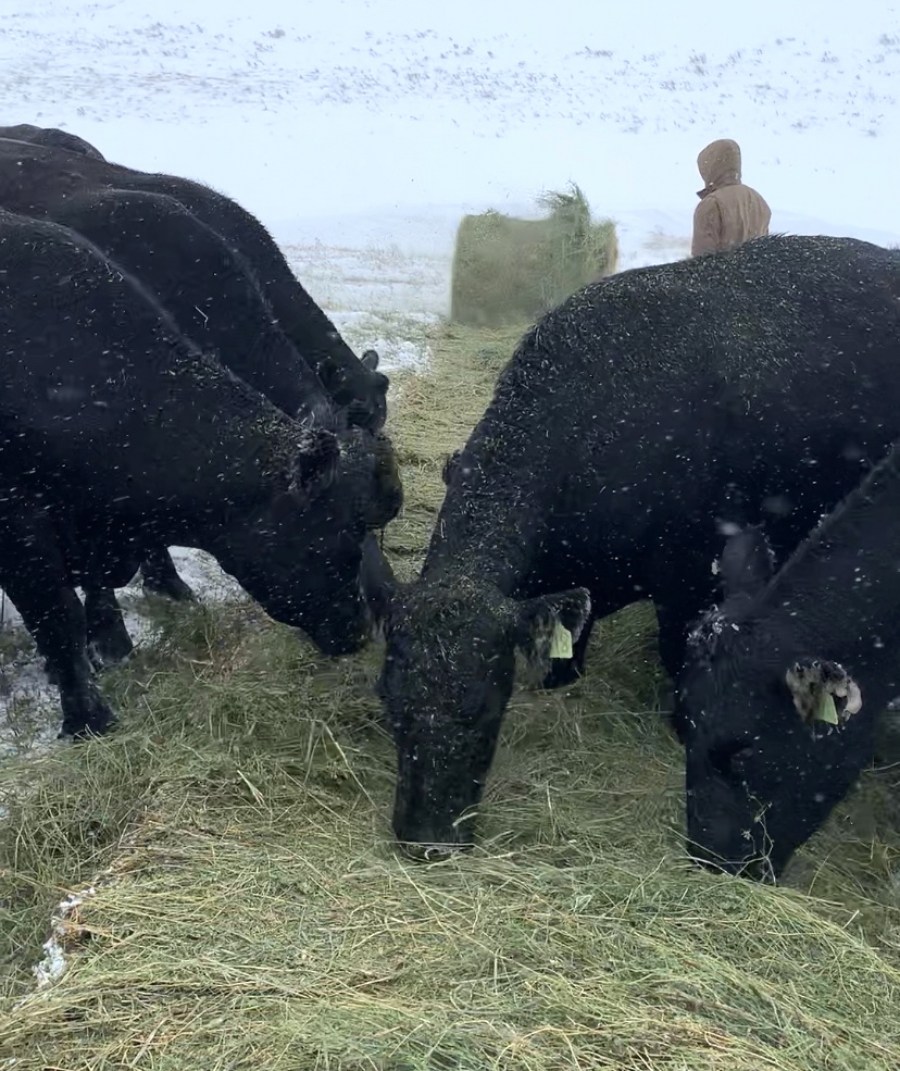
The Cherry Creek feedlot usually has about 3,000 head of cattle, although they are not full right now as they are in the transition stage of some leaving and others coming in. At this point, he feels they are way behind in the work they need to do in the fall.
“By the middle of September, we have the manure cleaned out, the feed is in and in the yard. We are really behind, and like the grain farmers, we have some done and some to do.”
He said there are 600 acres of corn that should be coming in. They are where it is ready to go, but right now, the winter supply of feed is still out on the field. Like all crops, if it is too wet, or snowy, they cannot get out and bring it in. There is a lot to silage, Albrecht said, which is the same for all the livestock operators in this situation.
“The 10 or 11 guys that do it, their feed is out in the field,” he stated. “I’m trying to be optimistic, to say I’m going to get that.”
In his opinion, it would be good to get the snow off the fields, and then have them freeze over. That way, it would eliminate the mud, and they could get out and bring in what they need.
As well, they need to get the manure out of the barns. They need to clean them out for the winter, so they can bring in the cattle. However, you need somewhere to put that manure. Albrecht said they are allowed to spread it until November 15. In the past, that deadline has been extended by a week due to weather concerns, but authorities do not want it spread on frozen ground where it can run off in the spring. He said it is fortunate for him that his is semi-solid, and if it has to be stockpiled over the winter, he can do that.
“I have to wait until the corn is off to spread the manure. It has to go out but you don’t want to wreck your fields. It needs to be done, but the biggest thing is timing. I’m hoping to get spreading this fall, but plan B would be to hold it and spread it next year.”
Albrecht said it is different for hog manure, as it is liquid and cannot be stored.
Paul Bell of Redhand, which deals in liquid hog manure and spreading, said they are waiting to get rid of the snow and moisture right now. They have got some work done, but harvest situations determine their pace. In order to put on the manure, the crops must be off first. As for cleaning out the lagoons, if worse comes to worst, they can do enough to hold them over the winter. However, Bell feels it has not got to that yet, and is holding positive everything will get going again.
“We can’t go til the farmers are done,” Bell said. “We just want the snow to melt and the moisture to go. It’s just a waiting game, that’s all it is right now.”
What the wet weather did, the snow simply made worse. Albrecht said the storm was tough on the cattle. Just like people, they do not like the wet snow. In the proper winter, it is drier, they have their full coats and they are more accustomed to it. Now, the long wet period is taking its toll.
“After a month of cloudy, rainy weather,” Albrecht explained, “it wears on us and the cattle too. You get illnesses and other issues. The day and a half storm was hard on the cattle; it put some strain on them. The wet snow, like drizzle, it cuts through us, and it does the same with them. It was the combination of the wet snow, the duration of it and the wind.”
There is plenty for him to do. Albrecht said he would be looking for places to put the animals, to improve their conditions, to keep them healthy. Then he will want to bring in the corn, and clean the feedlot. Usually he likes to keep the feedlot full, but he is thinking of not bringing in any new cattle until the New Year, as everything is backed up. The area was fortunate in the past with good weather, and he figures this fall was just our turn.
“We’ve got to support each other. We’re all in this together. We’re not the only ones in this. It is an act of nature that we didn’t cause and we have to stay positive. Farmers are tough, and we’ll be back again.”
by PAUL RAYNER, Recorder staff