
Again, numbers are preliminary, but they are looking at spending around $150,000 on patching in the urban ward 2024. As she and CAO Leo Poulin explained, it will take some time to come up with a game plan for the streets. Not all of the frost is out of the ground, and if there is a lot more water, new issues could emerge. They could be jumping the gun by saying exactly where the work will be done or how much will be accomplished. It will take a few weeks to figure this out.
There are reasons for focusing on patching this year. Bringing in a paving crew can be extremely expensive now. Companies have “mobilization fees” to cover certain incidentals, which go on before the actual work starts. These fees can take up a large chunk of a budget before any asphalt is laid. It is often a better plan to work with other municipalities in the area to book a company together, or to have a couple of large projects planned at the same time to make it worthwhile. Swanson said as an example they will be looking at paving a street in the new development soon. This would work to add in more projects when it happens.
This also means the 23 spots where the water valves were put in over the last two years will be waiting until 2025 to be re-paved. They are however, planning to put a concrete apron on the area of Cherry Street by South Railway – near the Boundary Co-op – that is full of potholes. This is a better solution, Swanson said, than to continue to patch it.
It is also important to remember that some areas, like the frost boil in front of Tommy Turtle on Mountain Street, are on highways and a provincial responsibility.
One idea is to put money away each year to cover larger work on the streets in the future.
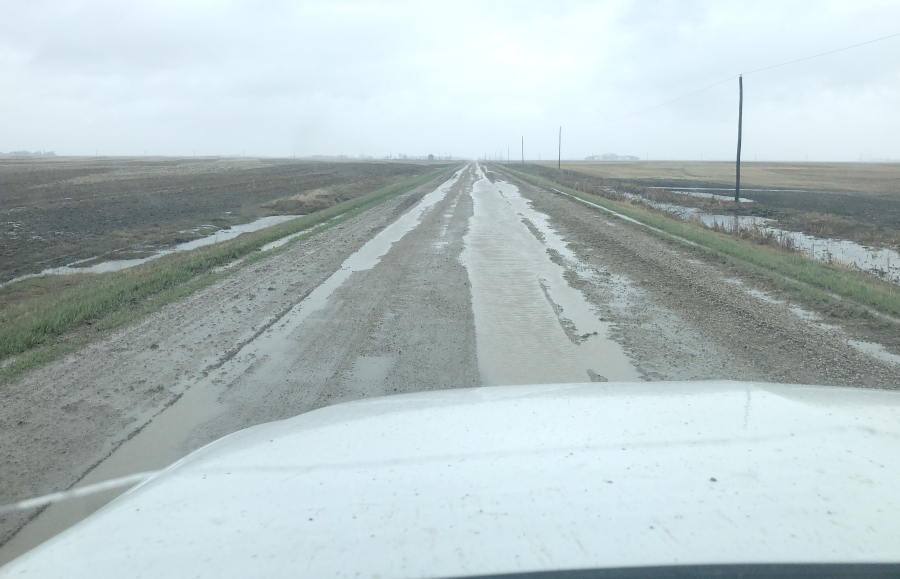
Over in the rural ward, the ongoing work on the roads will continue. Preliminary numbers show an increase to $830,000 to be spent there in 2024, which includes $150,000 from a recent EMO grant, which will be devoted to acquiring more shale. Again, they will need to wait to see where the worst winter damage was done before figuring out where work will be done.
There are always challenges. Finding gravel for rural roads is tough and expensive.
“To get gravel in the municipality is a difficult job. Each year, the cost of the product is more, and the trucking costs more. It is a balancing act, so we do what we need to do.”
In town, they bring in a private company to do patching. However, some companies are reluctant to take on the smaller jobs, especially with multi-million dollar projects around. This is a challenge with other construction projects as well.
However, the plans are to do as much work as they can this year, and continue into the future. Once the budget is completed, the areas are assessed and the area warms up a little, the hope is the roads and streets will move on what they can.
“We have a list of spots, and we will wait a few weeks until the frost boils are all out, and then make some decisions,” Swanson explained.
by PAUL RAYNER, Recorder staff