

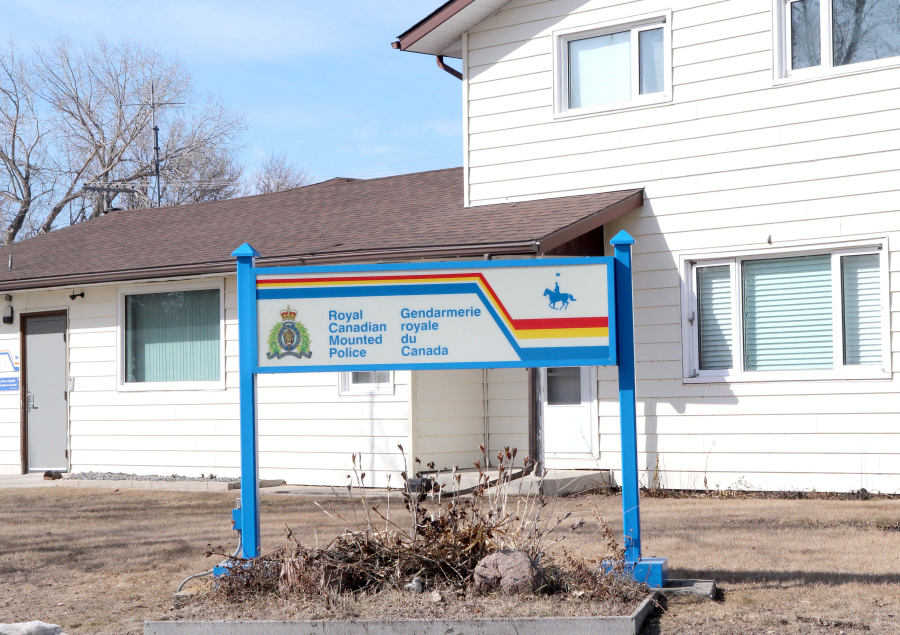
Boissevain-Morton Head of Council Judy Swanson said the municipality has had challenges paying for its policing, two officers at present, for some time, but recognized the importance of having law enforcement in the community. Therefore, they have always maintained their contract with the RCMP to guarantee that.
When the new collective agreement came with a provision for retroactive pay, Swanson said it was assumed by municipalities that they would not have to pay for this, as they were not at the table when the negotiations took place between the parties. They felt the federal government should pick up the retro tab.
“We already had increased costs because of the new collective agreement,” Swanson stated. “We felt that at what point does someone get to make a decision for another level of government without you being at the table? None of us were at the table.”
Swanson said they knew about this being charged to them for some time, but they waited for the federal budget, hoping it would include an accommodation for the retro pay. When the budget came out on March 28, it did not include any assistance. As the Federation of Canadian Municipalities stated, when cost estimates
to some municipalities, they turned out to be far below the final agreements increase, with the retroactive pay going back to 2017.
Boissevain-Morton received a bill for $52,000 for their share on March 31. It was to be paid in full in 45 days. Since then, they received a further e-mail advising them they could pay the amount over a two-year span.
Among the problems is that Boissevain-Morton, as well as other Manitoba municipalities, are in the tail end of their budget process. Much of their finances are tied up for the coming year. In fact, Boissevain-Morton is planning its public meeting on their financial plan on April 27. There is very little flexibility for this sudden amount.
“To come up with another $50,000 in a budget you have already done is ridiculous.”
As well, it is an example of the federal government downloading on municipalities.
“We all need policing, but we should not have to pay something where we were not at the negotiating table,” Swanson said. “I guess we all knew there would be retro pay but we didn’t think we would get stuck with it.”
This is a situation municipalities from much of the country, excluding Ontario, Quebec and Newfoundland, are stuck with. The FCM said Alberta municipalities are on the hook for $80 million in retro pay. The Association of Manitoba Municipalities said their 21 members who have a service contract would have to pick up $5.1 million. It is $145 million in British Columbia.
Swanson said for Boissevain-Morton the retro cost is plenty, but for some others it is in the millions of dollars, depending on their size and how many officers they have. Selkirk is looking at around $500,000. Larger centres like Dauphin or areas like Thompson will be looking at huge bills. This is over and above the raises.
“It’s a big hit for municipalities and it is a form of downloading.”
Swanson added the municipalities are the ones who have to produce balanced budgets. This would likely mean many corporations would have to raise taxes in order to meet this amount.
Swanson is the co-chair of the Western Caucus, a collection of area municipalities that meet regularly on issues and often lobby collectively. She said the retro pay was discussed at that level, but there are only a few of them involved, like Killarney, Virden, Souris and themselves, who are directly impacted. She has talked to to other mayors outside of the caucus who are impacted, and they too are not impressed.
In a statement revised in May of 2022, Public Safety Canada admitted that FCM had not been directly consulted during negotiations, but said their committee included municipal representatives. They also said groups and municipalities had been in contact with them complaining about the lack of consultation.
“Contracting jurisdictions were well aware that RCMP RMs (regular members) and reservists had not had a pay increase since 2016 (their salary had been frozen for five years), that is, to expect retroactive increases,” the statement reads.
Over time, western provinces have considered establishing provincial police forces, and some communities have created their own, to replace the federal organization. Whether or not this retro pay development will push further examination of this is unknown at this time.
The head of council stressed that council has nothing against the RCMP members in the community or what they receive for policing in the area. She said they understood they had to be competitive with other police forces in order to keep personnel. It is the back pay that is the issue.
Boissevain-Morton signed a FCM resolution calling on the federal government to ensure municipalities are effectively consulted, informed and at the table on issues related to policing costs. As of now, they have not paid the bill
“At the end of the day is $50,000 going to kill us?” Swanson asked. “Likely not, but it’s going to go on your taxes, and is it fair? For us the amount is not huge, but for those bigger centres it is and I don’t know how they are going to make out.”